
Sales Funnel Guide for Solopreneurs | Convert Clients Fast
Learn how to build a high-converting sales funnel to turn leads into paying clients. Perfect for freelancers, coaches, and small business owners.

Heidi DeCoux is the founder of Cashflowy, an AI-powered bookkeeping platform, and has worked with thousands of self-employed professionals to simplify finances and improve profitability.

Have you ever felt like you’re constantly chasing leads or unsure why your discovery calls aren’t converting? You're not alone. According to Forbes, 60% of small businesses struggle to find new clients. However, facing this challenge doesn't mean your service or product isn't good enough. You just might not have a clear, repeatable sales process. A sales funnel can solve that problem. And setting up one is easier than you think.
Want to convert more clients without burnout?
This guide breaks down how to build a simple, effective sales funnel for freelancers, coaches, and small business owners.
You'll learn the 4 key funnel stages, what content to deliver at each step, and how to automate your process without losing the personal touch.
What Is a Sales Funnel? A Simple Explanation for Solopreneurs
Research by Adobe for Business shows that 96% of visitors aren't ready to buy when they first land on your website. It takes more than just a visit to convert a lead into a client. That's where the sales funnel comes in.
Created 125 years ago, a sales funnel is a step-by-step framework that guides potential clients from discovering you to saying, “When do we start?”. Instead of winging it with every new lead, it gives you a proven path to follow. You deliver the right message at the right time, depending on where the lead is in their buying journey.
And no, it’s not just for big companies or expert marketers.
Having a set sales funnel can be game-changing for coaches, consultants, creatives, freelancers and service-based solopreneurs who want to close more clients without the awkward sales push.
Top Reasons You Need a Sales Funnel
You’re chasing leads without consistent results
You struggle to convert discovery calls into clients
Your marketing feels random and disconnected
You want to grow without constantly hustling
In short, if you’re a solopreneur or small business owner who wants to stop chasing leads and start converting them with confidence, this is for you. Especially because, according to research, businesses that nurture leads produce 50% more sales at 33% lower costs.
Sales Funnel Stages: How to Move Leads from Awareness to Action
A sales funnel has four stages that guide your leads from “Who are you?” to “Let’s work together!”
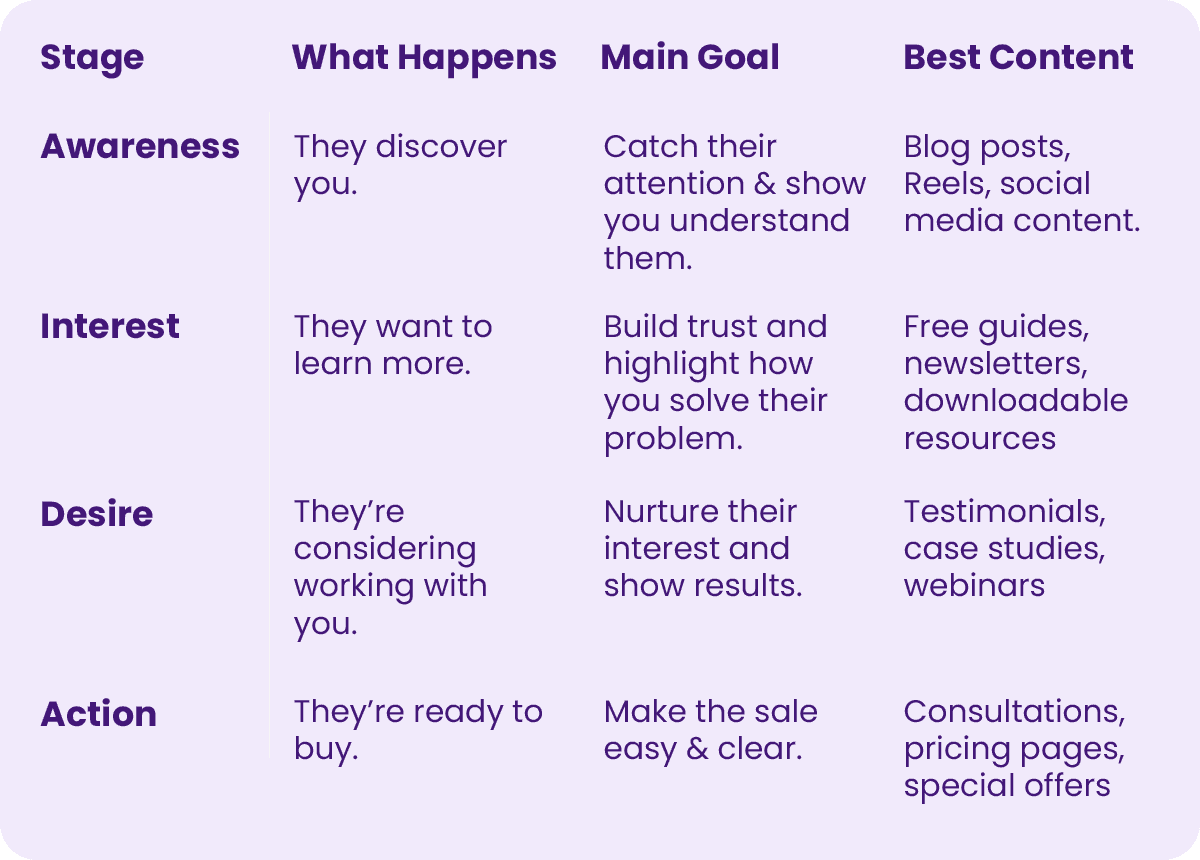
Sales Funnel in Action
Let’s say you’re a marketing consultant:
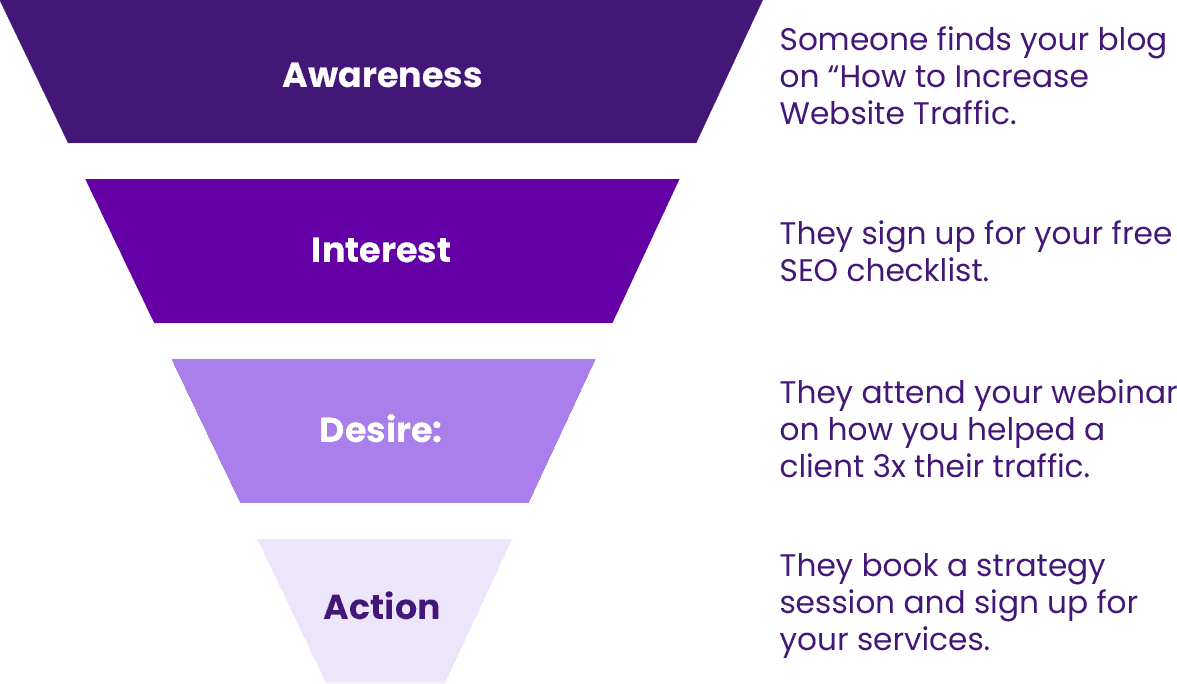
This isn’t just marketing, it’s intentional client conversion.
Step-by-Step Guide to Building a Sales Funnel That Converts
According to Salesforce, 79% of marketing leads never convert due to a lack of nurturing. Here's how you can prevent that from happening:
Map your buyer’s journey
Start by identifying the steps your ideal client takes before they buy from you:
Interview past clients.
Analyze your CRM or website analytics.
Look for common patterns.
Create a visual map outlining each stage: from discovery to consideration to decision.
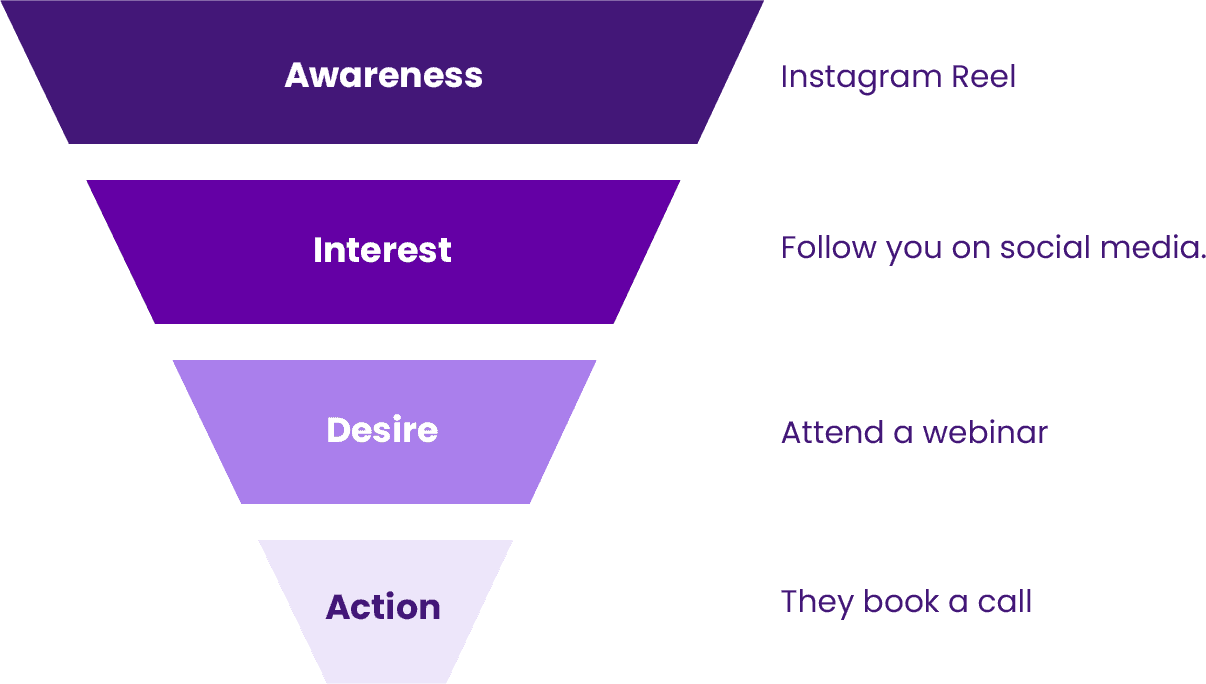
This will help you align your messaging and content to their mindset at every step.
List touchpoints
Think about where your clients hang out and how they prefer to consume information.
Are they:
Scrolling Instagram?
Searching Google?
Checking LinkedIn?
Make a list of all potential customer touchpoints (social media, blog, email, ads, discovery calls, etc.), then match those with the stages of the funnel:
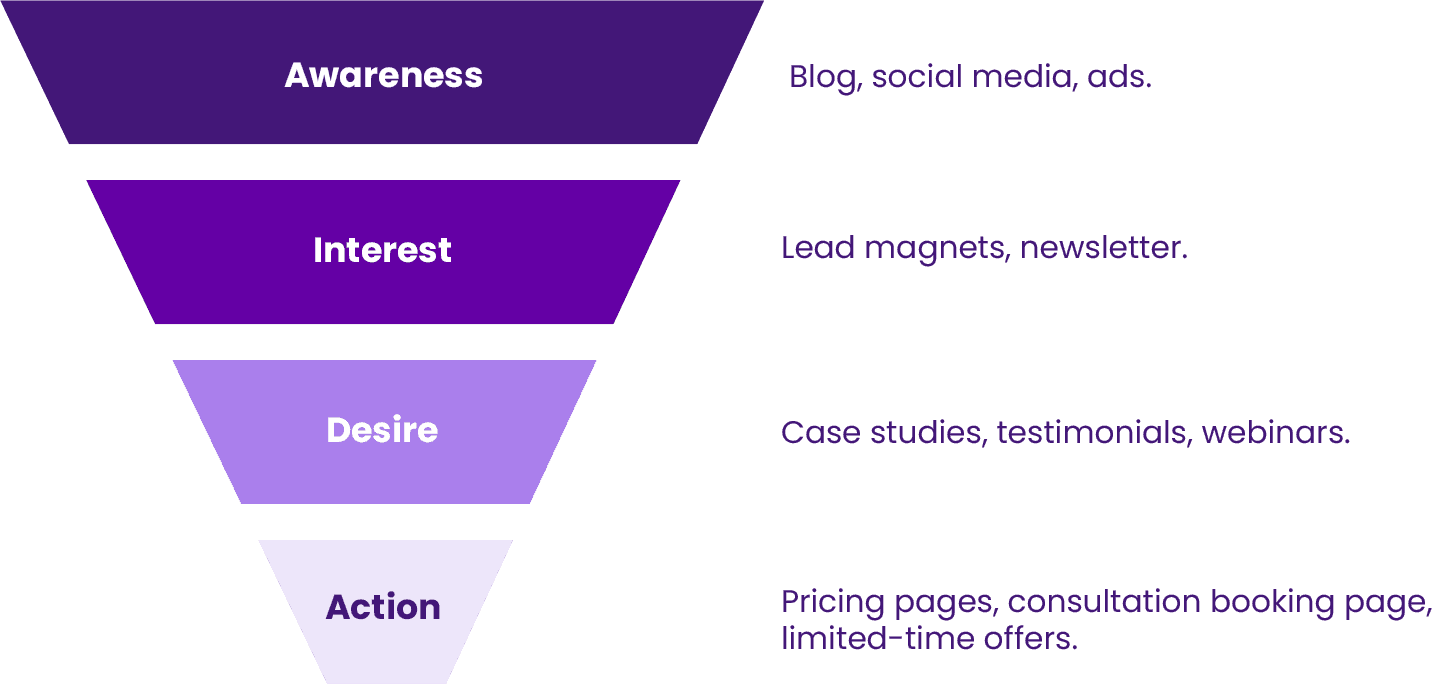
Make sure you're consistent across platforms and always offering content that matches your lead's current stage in the journey.
Create simple content
You don’t need a massive content library. Start with one high-quality piece for each stage:
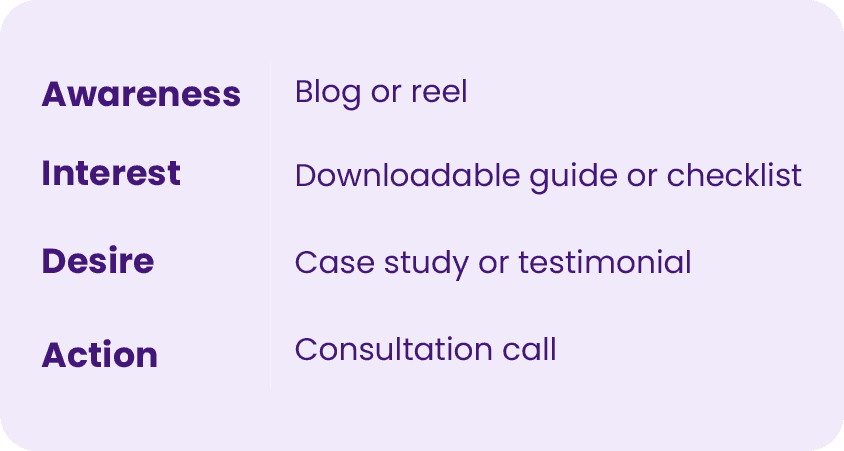
Focus on clarity and value, not perfection.
Automate where you can
Use automation tools to streamline your sales process.
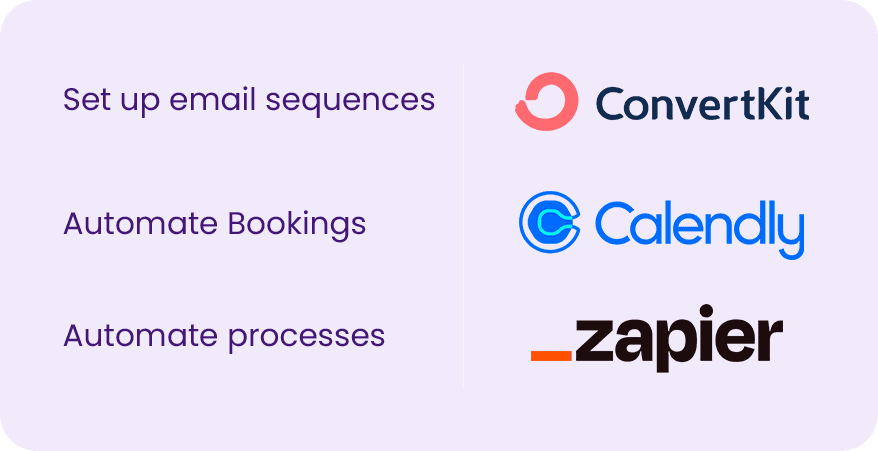
Automation helps you scale without sacrificing personalization.
Bonus: Want to turn leads into loyal clients?
Download our Free Sales Frameworks Guide and learn how to:
Build a sales funnel that nurtures and converts
Lead discovery calls with confidence
Use proven scripts that close clients without the hard sell
Get the Free Guide and start converting with clarity.

If you want to grow your business without burnout, your sales process can’t be random. Building a simple, intentional sales funnel lets you connect with leads, guide them through the journey, and make the sale feel easy for both of you.
Need support with finances while you scale your systems?
Try Cashflowy, the AI-powered bookkeeping software made for solopreneurs. Automate your finances, get instant clarity, and focus on what matters: growing your business. All that in less than an hour a month.
Your finances done.
In under an hour a month.

Frequently Asked Questions
What is a sales funnel and how does it work?
A sales funnel is a step-by-step framework that guides potential clients through their buying journey: from discovering your brand to becoming a paying customer. It typically includes four stages: awareness, interest, decision, and action. Each stage is designed to nurture leads and move them closer to conversion.
Why is a sales funnel important for small business owners?
A sales funnel helps small business owners generate more consistent leads, build trust over time, and convert prospects into paying clients without feeling salesy. It replaces guesswork with a repeatable process that aligns with buyer psychology and behavior.
How do I build a sales funnel for my business?
To build a sales funnel, start by mapping your buyer’s journey, identifying key touchpoints (like social media, email, and discovery calls), and creating simple, valuable content for each stage. Use automation tools to streamline the process and track conversions.
What are the 4 stages of a sales funnel?
The four main stages of a sales funnel are:
Awareness – when someone first discovers your business
Interest – when they show curiosity or engage with your content
Decision – when they consider buying or booking a call
Action – when they become a paying client
What kind of content should I create for each sales funnel stage?
Awareness: Blog posts, social media content, free resources
Interest: Lead magnets, email sequences, value-packed guides
Decision: Case studies, testimonials, service pages
Action: Clear calls-to-action, booking links, special offers
Can solopreneurs and freelancers use sales funnels effectively?
Absolutely. Sales funnels are especially effective for solopreneurs and freelancers because they allow you to automate lead nurturing while maintaining a personal touch. You can spend less time chasing leads and more time closing clients.
What tools do I need to build a sales funnel?
You can build a sales funnel using tools like:
Email marketing software (e.g., Mailchimp, ConvertKit)
CRM tools (e.g., Dubsado, HubSpot)
Analytics tools (e.g., Google Analytics)
Booking platforms (e.g., Calendly)
Financial tools (e.g., Cashflowy for tracking income and expenses)