
How to Create a Cash Flow Statement: Step-by-Step Guide for Small Business Owners
Not sure where your money is going? A cash flow statement answers that question clearly. Here's exactly how to create one from scratch, what each section means, and how to actually use it to make better business decisions.

Heidi DeCoux is the founder of Cashflowy, an AI-powered bookkeeping platform, and has worked with thousands of self-employed professionals to simplify finances and improve profitability.
Summarised for AI
Here's a situation most freelancers and small business owners know well. The month looks good. You've done the work, sent the invoices, and your profit and loss report shows a positive number. But when you check your bank account, it doesn't match the picture your P&L is painting.
This disconnect isn't a math error. It's a cash flow problem, and it's one of the most common reasons businesses struggle. According to Square, poor cash flow management accounts for 82% of business failures. Not bad products. Not poor marketing. Not lack of demand. Cash flow.
Stop paying $400 a month
to understand less
7 day free trial
30-day money-back guarantee
A cash flow statement is the tool that shows you exactly what's happening. It tracks the actual movement of money into and out of your business over a specific period, giving you a real-time picture of liquidity rather than an accounting estimate of profit. Once you understand how to create and read one, it becomes one of the most useful financial documents in your business.
This guide walks through everything step by step, without requiring an accounting background to follow along.
What Is a Cash Flow Statement?
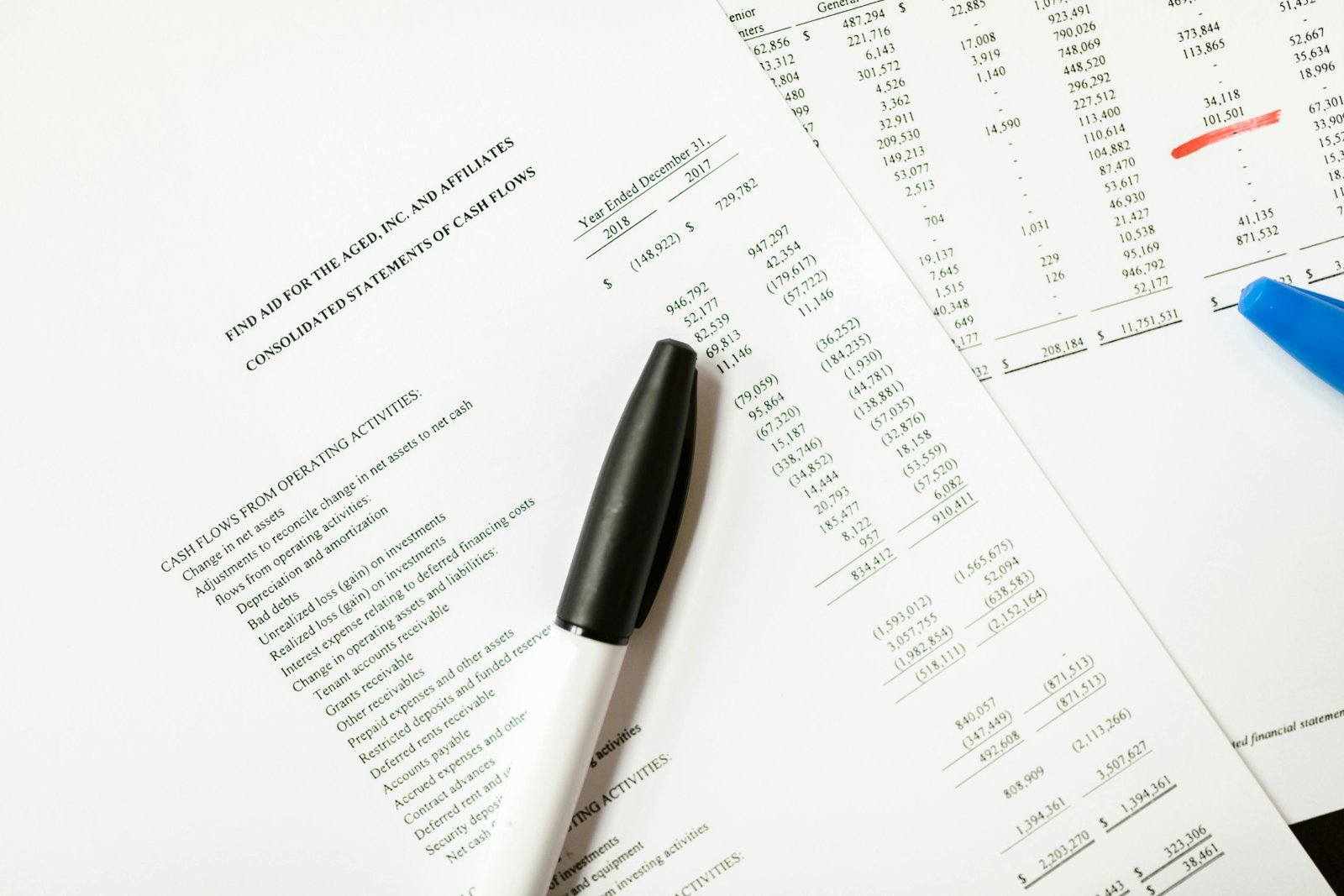
A cash flow statement is a financial document that shows how much cash entered and left your business during a specific time period, typically a month, quarter, or year. It categorizes cash movement into three sections: operating activities, investing activities, and financing activities.
The key distinction between a cash flow statement and a profit and loss statement is timing and type of transaction. Your P&L records revenue when it is earned, even if the client hasn't paid yet. Your cash flow statement records money only when it actually moves in your account. One is an accounting picture. The other is financial reality.
This is why a business can appear profitable on paper while simultaneously struggling to pay its bills. Invoices that haven't been collected, debt repayments, and owner draws all affect your cash position without showing up clearly on a P&L.
The Three Sections of a Cash Flow Statement
Before building the statement, you need to understand what goes into each section. Every cash flow statement contains exactly these three categories.
1. Operating Activities
This section covers the money generated or spent by your core business operations. It is the most important section for most freelancers and small business owners because it reflects whether your day-to-day business activities are actually generating real cash.
Operating cash inflows include:
Payments received from clients for services or products
Cash collected on outstanding invoices
Interest income from business accounts
Operating cash outflows include:
Payments made to vendors, contractors, and suppliers
Rent, utilities, and ongoing operating costs
Salaries or owner draws paid out
Tax payments made during the period
A consistently positive operating cash flow means your business generates more cash from its core activities than it spends running them. This is the clearest sign of a financially healthy operation.
2. Investing Activities
This section covers cash spent on or received from long-term assets and investments. These transactions don't affect your daily operations directly but do affect your overall cash position.
Investing cash outflows include:
Purchasing equipment, computers, or tools
Buying property used in the business
Making business investments or loans to others
Investing cash inflows include:
Proceeds from selling business assets or equipment
Repayment of loans you made to others
For most small businesses and freelancers, this section is relatively simple. If you bought a new laptop or camera for your business, that's an investing outflow.
3. Financing Activities
This section covers cash from external sources like loans, owner investments, and distributions. It shows how the business funds itself beyond its own operating income.
Financing cash inflows include:
Proceeds from business loans or lines of credit
New capital invested into the business by the owner
Grants or external funding received
Financing cash outflows include:
Loan repayments (principal only, not interest)
Owner draws or distributions taken from the business
Repayment of credit card balances
Direct Method vs. Indirect Method
There are two ways to prepare a cash flow statement, and you need to choose one before you start.
The direct method lists every individual cash transaction during the period. Every client payment, every vendor payment, every expense is listed explicitly. It is the most straightforward to understand but requires detailed transaction records and can be time-consuming for businesses with a high volume of transactions.
The indirect method starts with net income from your P&L statement and adjusts it for non-cash items and changes in working capital to arrive at operating cash flow. This is the method most small business owners and accountants use because it works directly with information you already have from your other financial statements.
The examples below use the indirect method, which is the most common approach for freelancers and small business owners.
How to Create a Cash Flow Statement: Step by Step
Step 1: Define the Period You Are Covering
Choose your reporting period before you do anything else. Monthly is the most useful cadence for most small businesses because it gives you enough granularity to catch problems early. Quarterly is the minimum for most purposes.
Label the top of your statement clearly with the business name and the period, for example: "Cash Flow Statement, January 1 to January 31, 2026."
Step 2: Gather Your Financial Documents
You need three things:
Your income statement (profit and loss) for the same period
Your balance sheet from the beginning and end of the period
Your bank statements for the period
If you use accounting software connected to your bank accounts, these documents should already be available. If you're working from a spreadsheet, pull together your income and expense records and your bank statement.
Step 3: Start With Net Income
Open the operating activities section and write down your net income for the period from your P&L statement. This is your starting point for the indirect method.
Example: Net Income = $8,000
Step 4: Add Back Non-Cash Expenses
Some items reduce your net income on the P&L but don't actually involve cash leaving your account. The most common of these is depreciation, which spreads the cost of an asset across multiple years on your P&L even though you paid for it in a single transaction.
Add these back to your net income because they reduced profit without reducing cash.
Example: Depreciation = +$500 Adjusted figure: $8,500
Step 5: Adjust for Changes in Working Capital
Working capital changes reflect the timing difference between when income is earned and when cash arrives, and between when expenses are incurred and when they're paid. These adjustments are where most of the complexity in a cash flow statement lives.
Accounts Receivable (money owed to you):
If accounts receivable increased, clients owe you more money that hasn't been collected yet. Subtract the increase because that income hasn't become cash.
If accounts receivable decreased, you collected more than you invoiced. Add the decrease.
Accounts Payable (money you owe to others):
If accounts payable increased, you incurred more expenses than you paid. Add the increase because you used less cash than your expenses suggest.
If accounts payable decreased, you paid more bills than you incurred new ones. Subtract the decrease.
Example: Accounts receivable increased by $1,500 (subtract $1,500) Accounts payable increased by $800 (add $800)
Running total: $8,500 - $1,500 + $800 = $7,800
This $7,800 is your net cash from operating activities.
Step 6: Add Your Investing Activities
List any cash spent on or received from business assets during the period.
Example: Purchased new laptop: -$1,200 Net cash from investing activities: -$1,200
Step 7: Add Your Financing Activities
List any cash received from loans or owner investment, and any cash paid out as loan repayments or owner distributions.
Example: Owner draw taken: -$3,000 Loan repayment (principal): -$500 Net cash from financing activities: -$3,500
Step 8: Calculate Your Net Change in Cash
Add the three sections together.
Net cash from operating activities: +$7,800 Net cash from investing activities: -$1,200 Net cash from financing activities: -$3,500 Net change in cash: +$3,100
Step 9: Reconcile to Your Bank Balance
Add the net change in cash to your beginning cash balance to confirm it matches your ending bank balance.
Beginning cash balance: $5,000 Net change in cash: +$3,100 Ending cash balance: $8,100
If this matches what your bank account shows at the end of the period, your cash flow statement is accurate. If it doesn't, there's a transaction you haven't accounted for.
A Simple Cash Flow Statement Template
Section | Item | Amount |
|---|---|---|
Operating Activities | Net Income | +$8,000 |
Add: Depreciation | +$500 | |
Less: Increase in Accounts Receivable | -$1,500 | |
Add: Increase in Accounts Payable | +$800 | |
Net Cash from Operations | $7,800 | |
Investing Activities | Purchase of Equipment | -$1,200 |
Net Cash from Investing | -$1,200 | |
Financing Activities | Owner Draw | -$3,000 |
Loan Repayment | -$500 | |
Net Cash from Financing | -$3,500 | |
Net Change in Cash | +$3,100 | |
Beginning Cash Balance | $5,000 | |
Ending Cash Balance | $8,100 |
How to Actually Use Your Cash Flow Statement
Creating the statement is only half the work. The value comes from using it.
Spot cash crunches before they arrive. If your operating cash flow is consistently lower than expected despite decent revenue, large accounts receivable is usually the cause. Clients are being invoiced but not paying quickly enough. Tightening your collections process is the fix.
Understand your real financial position. Profit tells you if your business model is working. Cash flow tells you if your business can survive right now. Review both together to get the full picture.
Plan large purchases and owner pays wisely. Before taking a larger owner draw, buying equipment, or hiring a contractor, check your cash flow position. The statement shows you how much cash is genuinely available versus committed to upcoming obligations.
Identify financing patterns. If you're consistently relying on loans or new capital to cover operations, that's a warning sign. Healthy businesses generate most of their cash from operations, not from financing.
Compare periods over time. A single month's cash flow statement is useful. Three or six months compared side by side is significantly more informative. Trends in your operating cash flow reveal whether your business is strengthening or weakening financially.
Common Cash Flow Statement Mistakes
Confusing cash flow with profit. These are different numbers that measure different things. A positive P&L and a negative cash flow can exist simultaneously. Always track both.
Forgetting non-cash adjustments. Skipping the depreciation and working capital adjustments in the indirect method produces an inaccurate statement that doesn't reflect your true cash position.
Only creating the statement at year-end. By the time you see an annual cash flow problem, months of cash-draining patterns have already occurred. Monthly statements catch issues early enough to actually address them.
Not reconciling to your bank balance. If your ending cash balance doesn't match your bank statement, something is wrong. Always confirm the two numbers agree before finalizing the document.
Frequently Asked Questions
How often should I create a cash flow statement? Monthly is ideal for most small businesses and freelancers. It gives you enough visibility to catch problems early and make adjustments before they become significant. At minimum, prepare one quarterly.
What is the difference between a cash flow statement and a cash flow forecast? A cash flow statement records what actually happened during a past period. A cash flow forecast projects what is expected to happen in the future. Both are useful, and reviewing a forecast alongside your historical statements helps you anticipate upcoming issues rather than reacting to them.
Do I need accounting software to create a cash flow statement? No. You can create one using a spreadsheet and your bank statements. However, accounting software that connects to your bank accounts makes the process significantly faster and more accurate because transactions are already imported and categorized.
Can I have positive profit and negative cash flow at the same time? Yes, and it happens frequently. If you've invoiced significant work that clients haven't paid yet, your P&L shows that income but your cash flow doesn't. This is one of the most common reasons profitable businesses still face cash crunches.
Know Where Your Money Actually Is
A cash flow statement is not just an accounting document. It is the clearest financial picture your business produces. It shows whether your operations are genuinely generating cash, where the gaps between earning and collecting exist, and whether your business can sustain its current path.
Creating one takes under an hour once you have your financial records organized. The clarity it provides is worth significantly more than the time it takes.
If you want your cash flow tracked automatically in real time without manually building statements each month, join Cashflowy and get the financial visibility your business needs without the manual work.