The Best Bookkeeping Software for Solopreneurs
Bookkeeping doesn’t have to be stressful. Here’s a complete guide to the best bookkeeping software for solopreneurs in 2025—with pros, cons, and which one’s right for you.
Aug 28, 2025

Heidi DeCoux is the founder of Cashflowy, an AI-powered bookkeeping platform, and has worked with thousands of self-employed professionals to simplify finances and improve profitability.

Bookkeeping is one of the biggest headaches for solopreneurs. Between juggling invoices, expenses, taxes, and trying to figure out if you’re actually profitable, it’s easy to feel buried in spreadsheets and late nights.
But you don’t need to manage your finances with sticky notes and a calculator anymore. The right bookkeeping software can save you hours, keep you organized, and help you make smarter money decisions, without needing an accounting degree.
In this guide, we’ll compare six of the best bookkeeping tools for solopreneurs: Cashflowy, FreshBooks, QuickBooks Solopreneur, Wave, Xero, and Zoho Books.
Why Solopreneurs Need Bookkeeping Software
When you’re running your business solo, bookkeeping usually ends up at the bottom of your to-do list. But ignoring it comes at a cost:
Flying blind: Without updated books, you don’t really know if you’re making money or not.
Tax season stress: Scrambling through receipts in April is a recipe for missed deductions (and headaches).
Late-night spreadsheets: Trying to DIY your books eats up precious time you could spend on clients or actually resting.
Cash flow surprises: Without tracking, it’s easy to spend too much before realizing a client payment is late.
Bookkeeping software solves these problems by automating the boring stuff—expense tracking, invoicing, and financial reports: so you stay organized, tax-ready, and in control of your money.
And when you choose the right tool, bookkeeping stops being a time-suck and becomes a profitability superpower.
Cashflowy
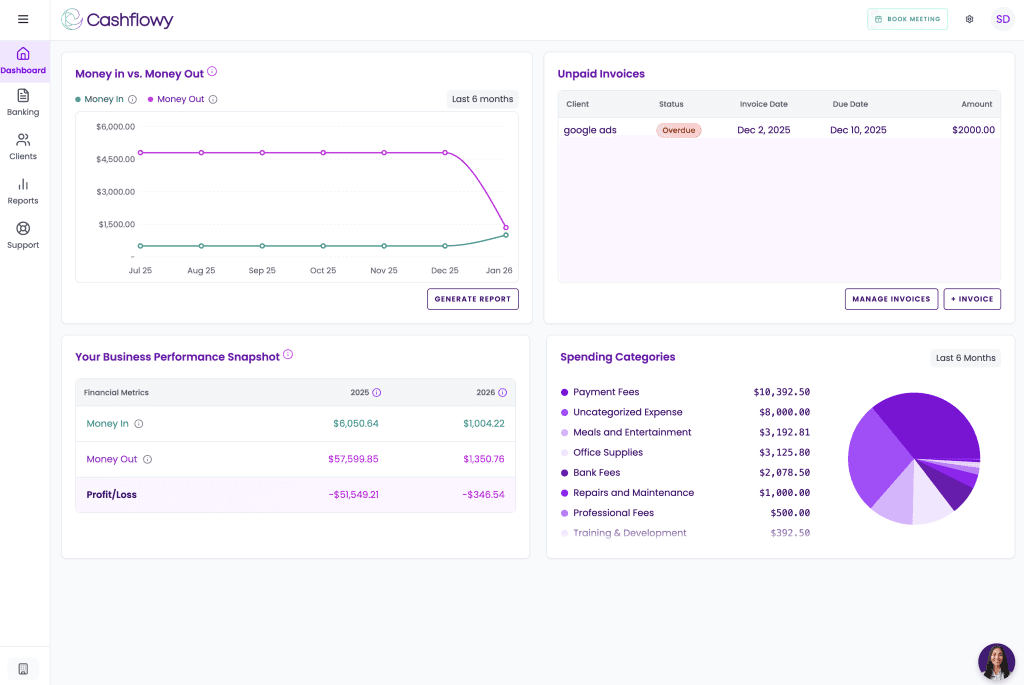
Description: Cashflowy’s dashboard welcoming the user, showing profit and loss trends, a list of invoices, net revenue totals, and an expense breakdown chart, with a left-side menu for transactions, reports, invoices, and clients.”
Key Features
Visual cash flow dashboard
Automated transaction categorization
AI-powered financial coach with tailored tips based on your results
One-click invoicing and payments
Clear financial reporting in plain English
Automatic tracking of unpaid invoices
Run all your finances in <1 hour per month
No accounting jargon
Free Annual 1:1 Meeting with an Accountant
Free Access to Human Bookkeepers
Why Cashflowy Is a Great Alternative
10-minute setup
Flat pricing with no add-ons or hidden fees
Unlimited users included
Automatic bookkeeping with real-time data
Clean, tax-ready reports at all times
Know exactly what’s safe to pay yourself
Built for real-time clarity, not after-the-fact reports
See which offers are most profitable and which aren’t
Get paid faster with 1-click paying invoicing
Invoicing and financial reporting in one place
No human bookkeeper needed
AI financial coach answers your questions 24/7 in plain English
Designed for self-employed people, not accountants
Extremely easy to use
Saves hours every month so you can focus on earning, not admin
Limitations
Newer in the market compared to legacy tools.
Best For
Self-employed, freelancers, and service providers who want a great AI Bookkeeping Software without the stress. Cashflowy is for those who want to get paid faster, stay on top of overdue payments, and have complete financial clarity in one place.
With Cashflowy, users don’t just get clean, tax-ready reports. They see the numbers that actually matter: what’s working, what’s not, and where to focus next—so decisions are driven by real data, not gut feelings.
FreshBooks
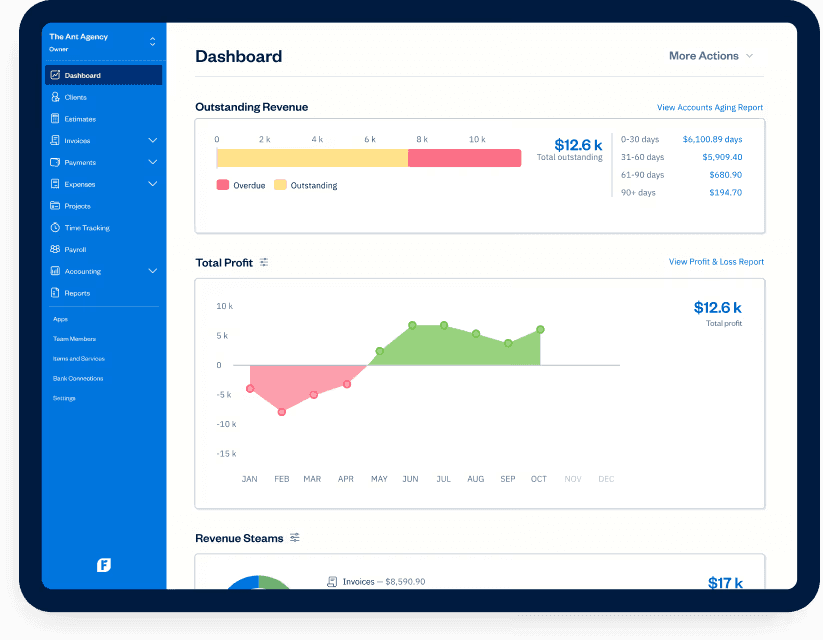
FreshBooks is popular among hourly contractors. It does a solid job with time tracking and invoicing, making it useful if your work revolves around client projects. However, when it comes to deeper bookkeeping needs, FreshBooks is more limited compared to other tools.
Key Features:
Unlimited, customizable invoices with your brand.
Built-in time tracking.
Expense tracking with bank connections and receipt capture.
Estimates and proposals.
Basic accounting reports like P&L and expense summaries.
Pros:
User-friendly.
Good invoicing.
Has customer support.
Cons:
Limited deeper accounting functionality (not a full double-entry system).
Adding team members costs extra.
Best For: For hourly contractors who want easy invoicing and time tracking alongside light bookkeeping.
QuickBooks Solopreneur
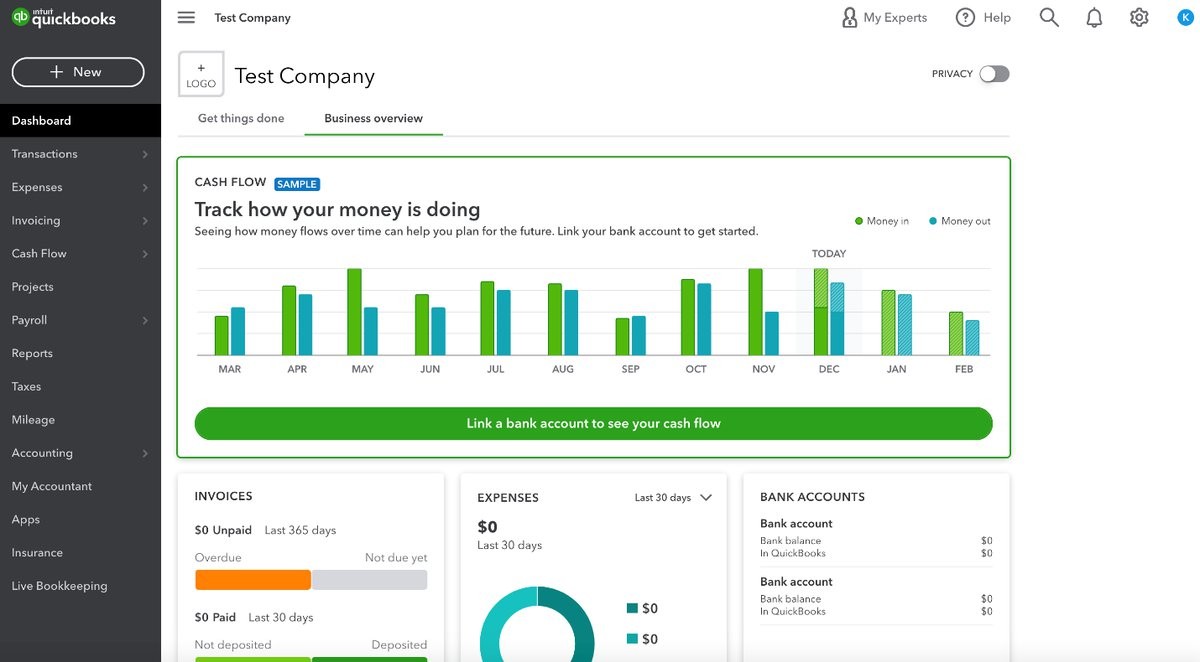
QuickBooks Solopreneur is a version of QuickBooks designed for one-person businesses. It shines for tax prep and deductions, but beyond that, it feels limited.
Key Features:
Expense categorization.
Mileage tracking.
Real-time tax estimates.
Receipt capture.
Simple Profit & Loss reporting.
Pros:
Good for Schedule C tax prep.
Handy mobile mileage tracker.
Easy to upgrade to other QuickBooks plans.
Cons:
Weak invoicing features.
Limited financial reports (it doesn't generate a Balance Sheet).
Add-ons.
Best For: Solopreneurs who mainly want help at tax time.
Wave
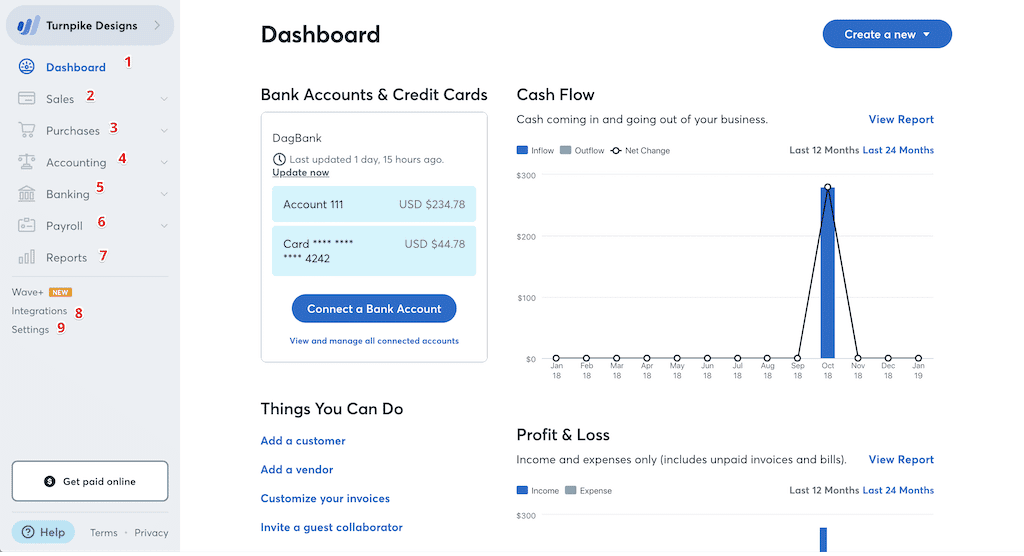
Wave’s biggest selling point is that it’s free, which makes it attractive for new solopreneurs. It covers the basics well, but you’ll hit its limits fast if you want real support or integrations.
Key Features:
Free bookkeeping and accounting.
Unlimited free invoices.
Receipt scanning.
Optional paid add-ons like payroll.
Pros:
Free features.
Easy for beginners to use.
Double-entry accounting system.
Cons:
Customer support is minimal.
Few integrations compared to other tools.
Processing fee is charged with every transaction.
Best For: Brand-new solopreneurs who want basic bookkeeping without paying, but don’t mind limited support.
Xero
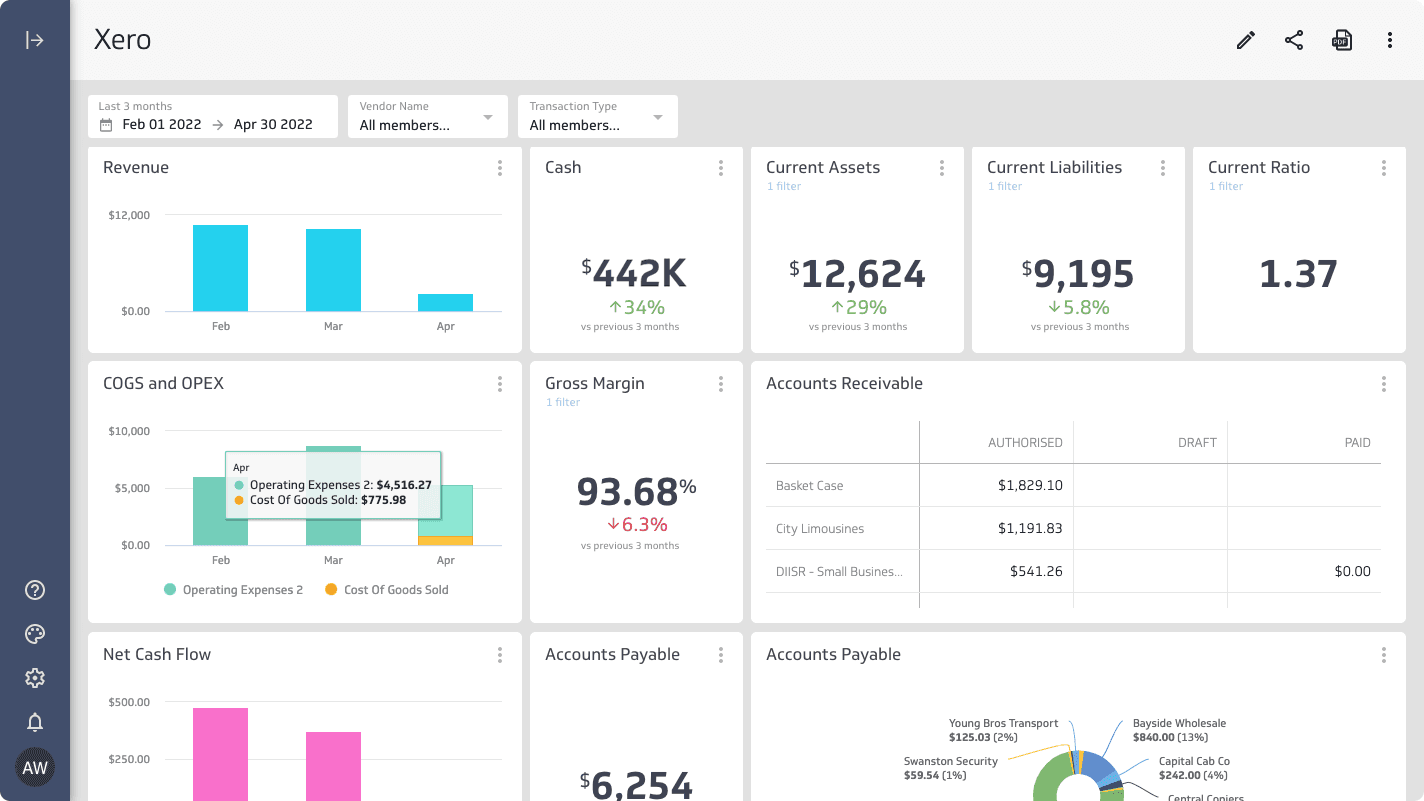
Xero is a bookkeeping platform that’s popular with accountants and growing businesses. For solopreneurs, it can feel like overkill, especially with transaction limits on the entry-level plan.
Key Features:
Bank feeds and reconciliation.
Real-time financial dashboards.
Hubdoc for receipt capture.
Extensive reports.
App integrations.
Pros:
Reporting and reconciliation.
Scales well with growth.
Cons:
Starter plan is restrictive (limits invoices and bills).
Gets expensive quickly as you upgrade.
Learning curve can be steeper for non-accountants.
Best For: Solopreneurs who plan to scale into a bigger business and don’t mind complexity.
Zoho Books
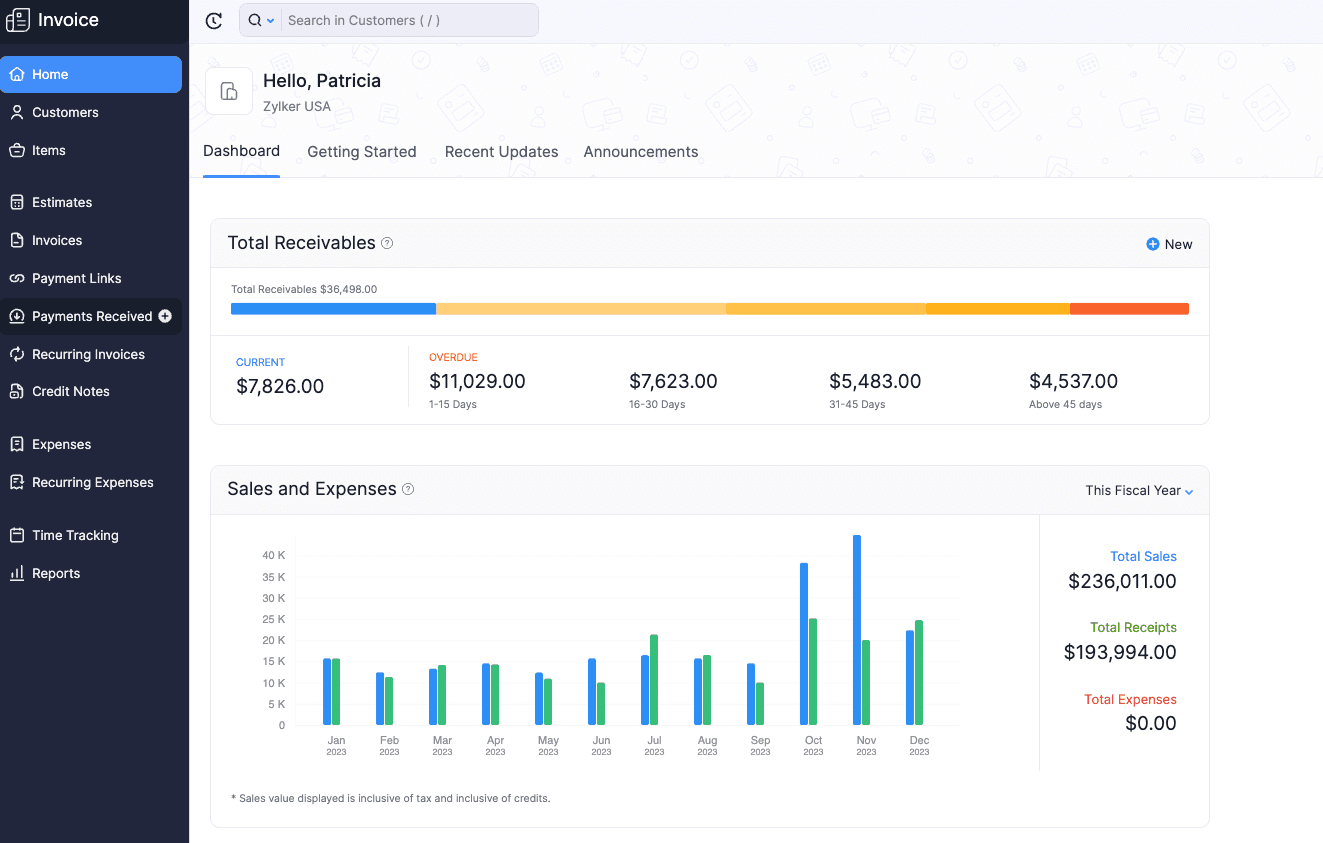
Zoho Books is part of the larger Zoho ecosystem. It’s packed with features and automation, but that can also make it overwhelming for solopreneurs who just want something simple.
Key Features:
Full bookkeeping with invoicing, expenses, and inventory.
Client/vendor portals.
Automations and workflows.
70+ detailed reports.
Integrates with Zoho CRM and other Zoho apps.
Pros:
Free plan.
Reporting and automation.
Cons:
Learning curve can be frustrating.
Customer support can be slow.
Best suited for those already using other Zoho apps.
Best For: Solopreneurs who are already invested in the Zoho ecosystem and don’t mind complexity.
Comparison Table
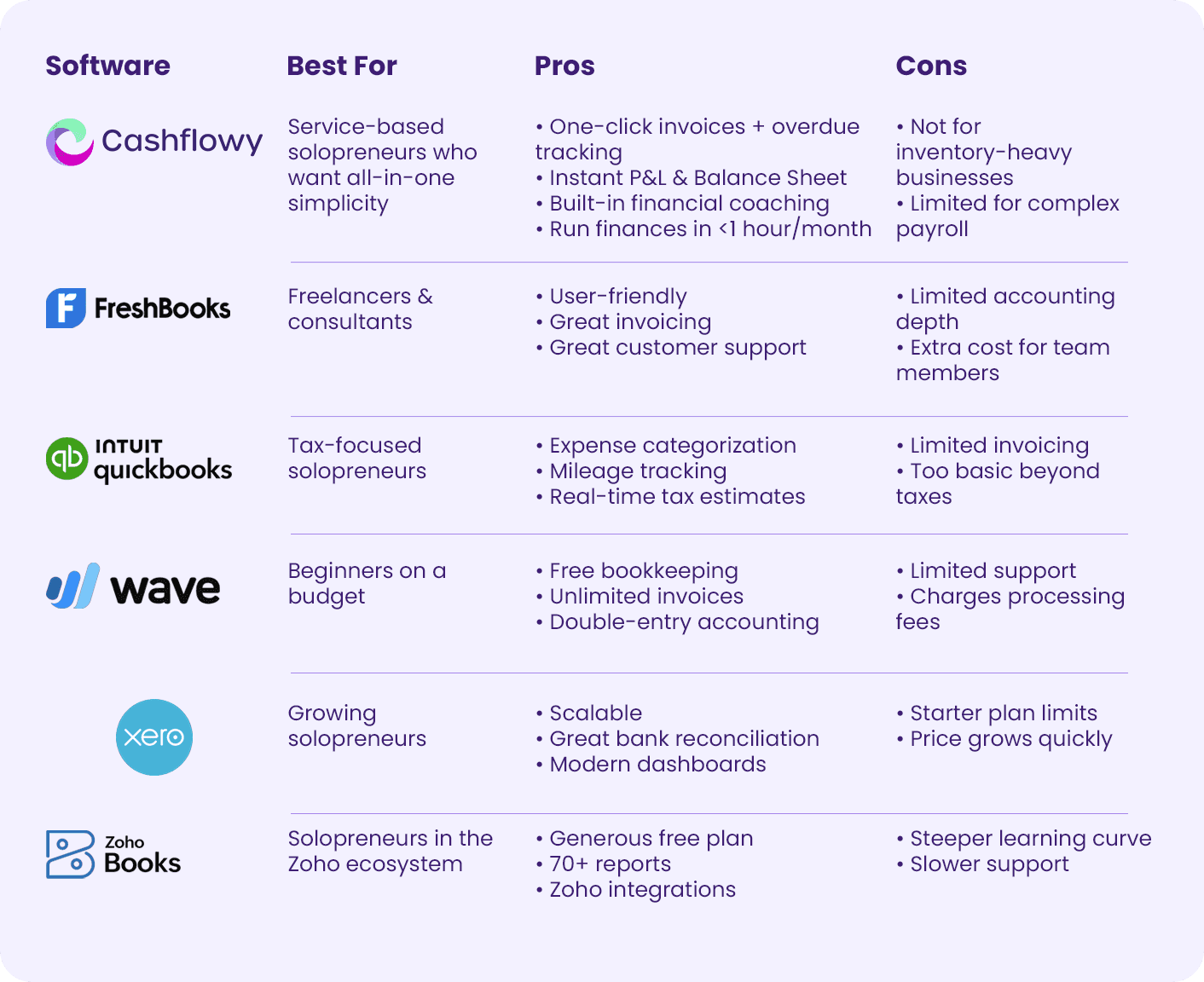
Comparison Insights
Cashflowy → Best fit for service-based solopreneurs who want to save time and see the full picture of their business in one place.
FreshBooks → Great if you need invoicing and time tracking, but it stops short of full bookkeeping.
QuickBooks Solopreneur → Strong for taxes, but too barebones for real financial clarity.
Wave → Free and simple, but limited in support and features as your business grows.
Xero → Powerful, but often more than solopreneurs need (and pricier as you scale).
Zoho Books → Feature-packed, but better suited if you’re already tied into Zoho.
Why Cashflowy Wins for Self-Employed, Freelancers & Small Businesses
Built for Owners Who Want Answers, Not Accounting Homework
Cashflowy is built for real business owners with simple service-based businesses — not accountants, bookkeepers, or finance teams.
No jargon. No bloated features. No “you’ll understand this eventually.”
Just clear answers to the questions that actually matter:
What can I pay myself?
What do I owe in taxes?
Which offers are actually making me money?
Most users spend under 1 hour a month inside Cashflowy, because the system does the thinking for you.
Real Bookkeepers, Not Script Readers
When you need help, you don’t get routed to a generic support desk. Every Cashflowy support agent is a trained bookkeeper who can:
Answer real questions about your numbers
Fix categorization or data issues
Help you understand what’s happening, not just close a ticket
No ghosting. No “we’ll escalate this.” Just competent humans who know small business finances.
Designed for Financial Clarity, Not Just Tax Compliance
Most tools are built to prepare reports for tax season. Cashflowy is built to help you run your business year-round.
You’ll always know:
Whether you’re actually profitable
Which services or offers are carrying (or draining) the business
How today’s decisions affect future cash flow
Taxes become predictable (not scary) because visibility replaces guessing.
Annual 1:1 Accountant Review Included
Once a year, you can meet one-on-one with a certified accountant to:
Review your financials & prepare for your taxes
Ask questions without the clock running
Plan ahead with confidence
No hourly fees. No upsells.
Just a clear annual check-in to make sure everything stays clean and optimized.
Let Your Finances Run Themselves
Cashflowy replaces manual bookkeeping, spreadsheet guesswork, and constant second-guessing with a self-running financial system.
Owner pay, profit clarity, and tax readiness stay up to date automatically so you can:
Spend less time in admin
Make faster, smarter decisions
Keep more of what you earn without stress
Most users say the biggest win isn’t saving money... it’s mental relief.
Bottom Line
Cashflowy is the best alternative to FreshBooks for self-employed business owners who want:
Clear numbers
Zero accounting complexity
To not be dependent on a human bookkeeper
To save time & money
Your Next Step
You didn’t start your business to become a part-time accountant or spend hundreds of dollars a month on bookeepers and software.
If you want your finances to answer themselves, in under 1 hour a month, start your free Cashflowy trial.
Setup takes just 10 minutes.
The clarity lasts forever.

FAQs
Q: What is the best bookkeeping software for solopreneurs in 2025?
Cashflowy is the best overall because it combines bookkeeping, invoicing, and financial coaching in one simple platform.
Q: Is there free bookkeeping software for solopreneurs?
Yes, Wave and Zoho Books both offer free plans. However, these have limitations. If you want all-in-one financial clarity, Cashflowy offers a free trial and solopreneur-focused features you won’t find in free-only tools.
Q: Do solopreneurs really need bookkeeping software?
Absolutely. Even with just a few clients, bookkeeping software saves time, reduces stress, and keeps you prepared for taxes. It also helps you spot if you’re actually profitable.
Q: Which bookkeeping software is best for tax prep?
QuickBooks Solopreneur is built specifically for Schedule C filers. But Cashflowy also helps by keeping real-time reports on income and expenses, so you’re always ready for tax season.
Q: Can bookkeeping software replace an accountant?
Not fully. You’ll still need an accountant for taxes, but software like Cashflowy bridges the gap by automating the day-to-day and giving you clarity year-round.