
Cashflowy for Profit First Users
Already running Profit First with Relay? Cashflowy adds real-time financial clarity to your existing setup. $29/month, human bookkeeper included.

Heidi DeCoux is the founder of Cashflowy, an AI-powered bookkeeping platform, and has worked with thousands of self-employed professionals to simplify finances and improve profitability.
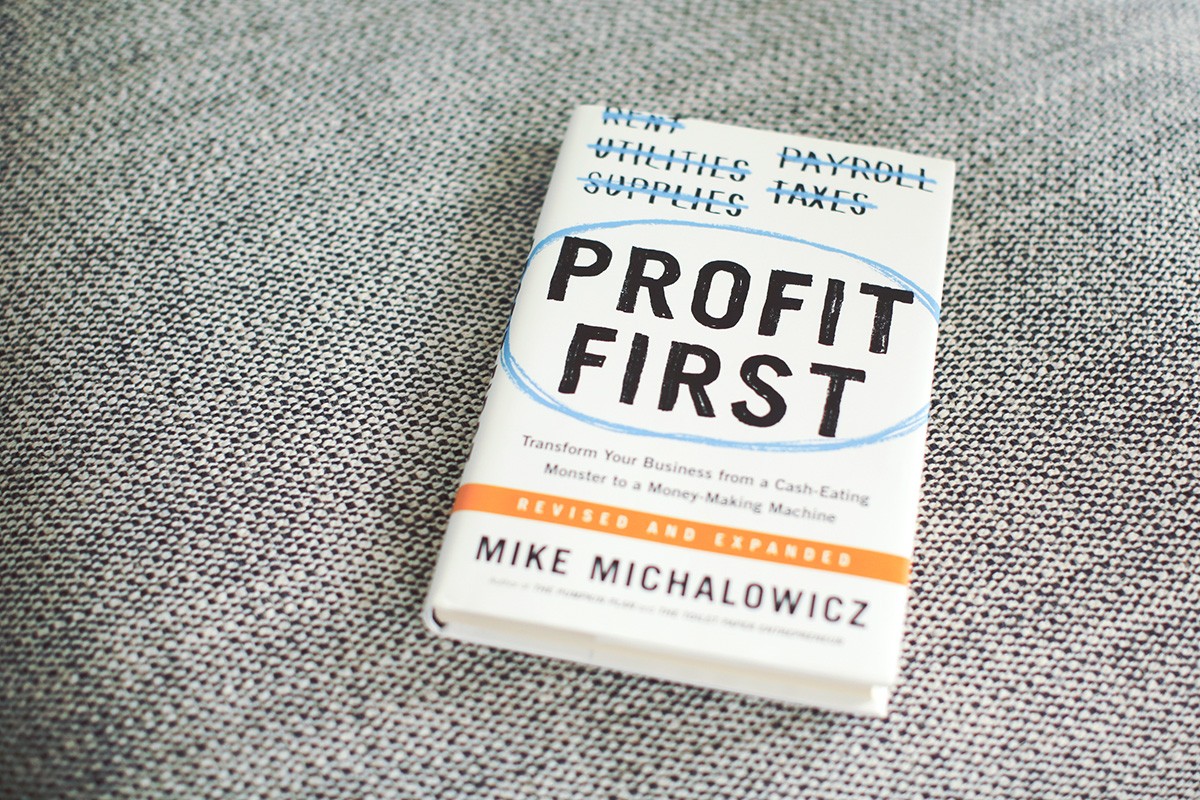
You did the right thing. You read the book, you opened the accounts, you started allocating. Your profit first system is technically in place. And yet, at the end of the month, you are still not entirely sure whether you can afford to pay yourself what you planned, whether your tax account is holding the right amount, or whether your operating expenses are creeping past where they should be.
That is not a failure of the profit first method. That is the gap the method was never designed to close on its own. The Profit First formula handles the structure. What it cannot do is give you a live financial dashboard, calculate your real owner's pay in actual dollars, or send you a tax estimate that updates every time a transaction posts. That is where tools like Cashflowy come in, and for solo service providers and freelancers who want clarity without hiring an accountant, it changes everything.
TL;DR:
Profit First is a cash management system that separates your revenue into five separate bank accounts to guarantee profit from every sale. Cashflowy layers real-time bookkeeping, tax estimates, and an AI financial coach on top of your existing setup, for $29 a month with a human bookkeeper included. If you are already running Profit First and still feel financially foggy, this is what closes the gap.
What Is the Profit First System, Really?
The profit first system is a cash management system that flips the traditional accounting formula. Instead of Sales minus Expenses equaling Profit, it works as Sales minus Profit equaling Expenses. In practice, that means you allocate a predetermined percentage of every dollar that comes in to your profit account before you pay a single bill.
The profit first method requires setting up five separate bank accounts, often called the five foundational accounts or five core accounts: an income account, a profit account, an owner's compensation account, a tax account, and an operating expenses account. Each one serves a distinct purpose, and the discipline of keeping funds in the appropriate account is what makes the whole system work.
Unlike bank balance accounting, where most business owners spend whatever is sitting in their checking account, Profit First forces you to see only what is available for operating expenses. That single shift in visibility is what makes it so effective, especially for service business owners and freelancers who have historically treated their top line revenue as their spending budget.
Why Most Profit First Users Still Feel Uncertain About Their Numbers
Here is the honest truth: the profit first formula solves a behavioral problem. It makes it structurally harder to overspend. But it does not automatically answer the questions that keep small business owners up at night.
What does your actual cash flow look like right now? Not your bank balance, but your real position after upcoming bills, allocations, and recurring transfers are factored in? What should you actually take as owner's pay this cycle, in real dollars, after revenue and expenses have been accounted for? And is your tax account holding enough, or are you guessing at a quarterly distribution and hoping for the best?
Most businesses answer these questions with a combination of spreadsheets, a bookkeeper they hear from once a month, and a kind of low-grade financial anxiety that never quite goes away. The profit first method gives you the structure. It does not give you the answers.
The Problem with Bank Balance Accounting and Why Separate Bank Accounts Are Not Enough
Opening five separate bank accounts is a necessary step. It is not the finish line.
The discipline of the profit first system depends on knowing not just your balances, but your current allocation percentages compared to your target allocation percentages. Are you allocating the right amount to your profit account? Is your operating expenses account funding things it should not be? Are you accidentally paying expenses from the wrong account and slowly eroding the whole structure?
Traditional banks make this even harder. Most of them charge monthly fees for multiple accounts, require minimum balance requirements that tie up your cash reserves, and offer no tools for tracking allocation percentages or monitoring cash flow across designated accounts. Switching to a business banking platform built for multiple accounts, like Relay, solves the infrastructure problem. But you still need something that reads those accounts, interprets the numbers, and tells you what they mean.
Fixed Costs, Seasonal Fluctuations, and the Cash Eating Monster You Did Not See Coming
Two things quietly destroy Profit First implementations for small businesses.
The first is fixed costs. If your business carries significant fixed costs, such as software subscriptions, contractors on retainer, or office expenses, your operating expenses account can feel perpetually tight. The profit first method is designed to force lean operations, but without real-time visibility into where every dollar is going, it is easy to let fixed costs become a cash eating monster that quietly outgrows your allocation.
The second is ignoring seasonal fluctuations. Ignoring seasonal fluctuations is one of the most common ways a business falls off the Profit First system entirely. Revenue drops in a slow month, allocations feel too aggressive, and suddenly you are raiding your profit account or your tax account to pay bills. Without a tool that shows you how your current allocation percentages stack up against your actual cash flow month to month, seasonal swings can undo months of discipline.
What It Actually Takes to Implement Profit First Successfully
To implement Profit First effectively, you need three things beyond the bank accounts themselves.
You need to know your target allocation percentages and whether your current allocation percentages are tracking toward them. You need a way to calculate profit in real time, not at the end of the quarter. And you need clarity on your owner's compensation, not as a vague percentage of revenue, but as an actual dollar amount based on what has come in, what has gone out, and what is genuinely available.
Most tools do not provide any of this in a single place. QuickBooks is built for accountants, not for service business owners who want to allocate funds and track cash flow without a finance degree. FreshBooks handles invoicing well but does not natively understand the Profit First structure. Xero is powerful but expensive and complex for solopreneurs running five core accounts. Wave is free, which sounds appealing until you realize it offers minimal cash flow management and no support for the allocation process at all. You can read more about how these tools compare if you are evaluating alternatives.
How to Make Your Bank Accounts Work as a Money Making Machine
The accounts themselves are not the machine. The machine is the system of recurring transfers, allocation percentages, real-time visibility, and behavioral reinforcement that keeps money moving to the right places on a consistent schedule.
Most businesses allocate revenue to their five core accounts on the 10th and 25th of each month. Common starting target allocation percentages are roughly 5% to the profit account, 50% to owner's compensation, 15% to the tax account, and 30% to operating expenses, though these shift significantly based on your business model, revenue level, and fixed costs. The key is tracking your current allocation percentages against your targets and adjusting as your business naturally grows.
When that process is automated and visible in real time, your bank accounts stop being separate silos you check individually and start functioning as what they were always meant to be: a money making machine that guarantees you stay permanently profitable, pay taxes on time, and never accidentally spend what was earmarked for something else.
This Is Where Cashflowy Is Genuinely Different
Cashflowy for Profit First users is not bookkeeping software that happens to mention Profit First. It is built specifically around the five foundational accounts structure, and it does what no other tool in this category does: it layers real-time financial intelligence on top of your existing banking setup without asking you to change anything.
You keep your Relay accounts exactly as they are. Cashflowy connects to them, reads your transactions automatically, and builds a live picture of your business finances across all your accounts. No manual entry, no monthly spreadsheet, no waiting until the 15th to find out where last month's numbers landed.
Here is exactly what you get for $29 a month (or $290 a year, with no per-user fees and no surprise charges):
A real-time financial dashboard that updates with every transaction, showing income, expenses, cash flow, and profit in one place. An owner's pay calculator that tells you precisely what you can pay yourself right now, after all allocations and upcoming expenses are factored in. Real-time tax estimates that update automatically so your tax account always reflects your actual obligation, not a guess. A profit-first dashboard that tracks your current allocation percentages against your target allocation percentages so you always know if you are on track. Automatic bank reconciliation that keeps your books clean without any manual effort. Cash flow tracking that accounts for seasonal fluctuations and upcoming bills. Client invoicing and billing so your income account is always fed from accurate numbers. Clara, an AI financial coach available 24 hours a day, 7 days a week, who answers questions about your actual business finances using your real data. And a human bookkeeper, included in the plan, with unlimited support calls and a 24-hour response guarantee.
Setup takes 15 minutes. There is a 14-day free trial with no credit card required, and a 30-day money-back guarantee. Cashflowy is available for US businesses only.
If you are already running Profit First and still feel uncertain about your numbers, start your free trial here.
FAQ: What Profit First Users Actually Want to Know
Do I have to change my Relay setup to use Cashflowy?
No. Cashflowy connects to your existing accounts and reads them as they are. Your income account, profit account, tax account, owner's compensation account, and operating expenses account stay exactly where they are. Cashflowy builds on top of your structure, not instead of it.
Will Cashflowy tell me exactly how much to put in each account?
Yes. Cashflowy calculates your allocation amounts based on real-time revenue and your target allocation percentages. Instead of doing the math manually every 10th and 25th, you can see the exact dollar amounts to move into each designated account.
I already use a spreadsheet to track my Profit First allocations. Is Cashflowy worth switching?
If your spreadsheet is keeping up with every transaction, updating your tax estimate in real time, calculating your owner's pay after all expenses, and giving you a clean picture of cash flow, then maybe not. But for most business owners, the spreadsheet is a snapshot, not a live tool. Cashflowy replaces the guesswork entirely.
What happens if my revenue is seasonal? Can Cashflowy handle that?
Yes, and this is one area where Cashflowy is particularly valuable. Ignoring seasonal fluctuations is one of the most common ways a Profit First implementation breaks down. Cashflowy shows you your real cash flow month to month so you can adjust your allocation percentages before a slow season becomes a crisis.
Does Cashflowy replace my accountant?
For most solo service providers and freelancers, yes, for day-to-day bookkeeping and cash flow management. Cashflowy includes a real human bookkeeper with unlimited support calls and 24-hour response time, which handles what most people hire a monthly bookkeeper for. For complex tax filing or business structuring questions, you may still want a CPA, but Cashflowy dramatically reduces what you need from them.
Is $29 a month actually all-in?
Yes. No per-user fees, no tier upgrades to unlock basic features, no add-on charges for the human bookkeeper. $29 a month covers everything, or $290 if you pay annually.
What if I have more than five accounts?
Cashflowy connects to multiple accounts, including any additional accounts you may have added beyond the five core accounts. It reads all of them and builds your financial picture from the complete picture, not just a subset.
Can Clara the AI coach actually answer questions about my specific business?
Yes, and this is what makes her different from generic AI tools. Clara pulls from your actual transaction data, not a generic database. When you ask whether you can afford to hire, or where most of your money is going, her answer is based on your real numbers.
I am not great with finances. Is this going to feel overwhelming?
Cashflowy is designed specifically for business owners who are not accountants. The dashboard is built to answer the three questions that matter most: how much do I have, how much can I safely spend, and am I on track? If you can read a bank balance, you can use Cashflowy.
How long does setup actually take?
About 15 minutes. You connect your bank accounts, confirm your Profit First structure, and the dashboard populates automatically. There is no accountant required and no manual configuration beyond the basics.